- 14 Oct 2026
- Hello Transport Team
- Heavy Equipment
Moving an excavator, dozer, tractor or crane is a different job from shipping a car. Heavy equipment is large, heavy and often oddly shaped, so the right trailer, the right permits and the right loading plan all matter. Here is what goes into a heavy haul shipment, and what you can do to get an accurate quote first time.
The information a carrier needs
- Make, model and year of the machine.
- Dimensions: length, width and height as it will sit on the trailer, including attachments such as buckets, blades or booms.
- Weight, including attachments.
- Running condition: whether it can be driven on and off, or needs to be winched or lifted.
- Loading and unloading method at each end: a loading dock, crane, forklift, or drive/roll on.
- Site access at pickup and delivery: room for a large truck to turn, ground conditions and any restrictions.
Measurements are worth getting right. A few inches of extra height or width can be the difference between a standard load and one that needs permits, so measure the machine rather than relying on brochure figures.
Choosing the trailer
- Flatbed: a flat deck for smaller, lighter machines that sit comfortably within height limits.
- Step deck: a lower rear deck that gives extra height clearance for taller loads.
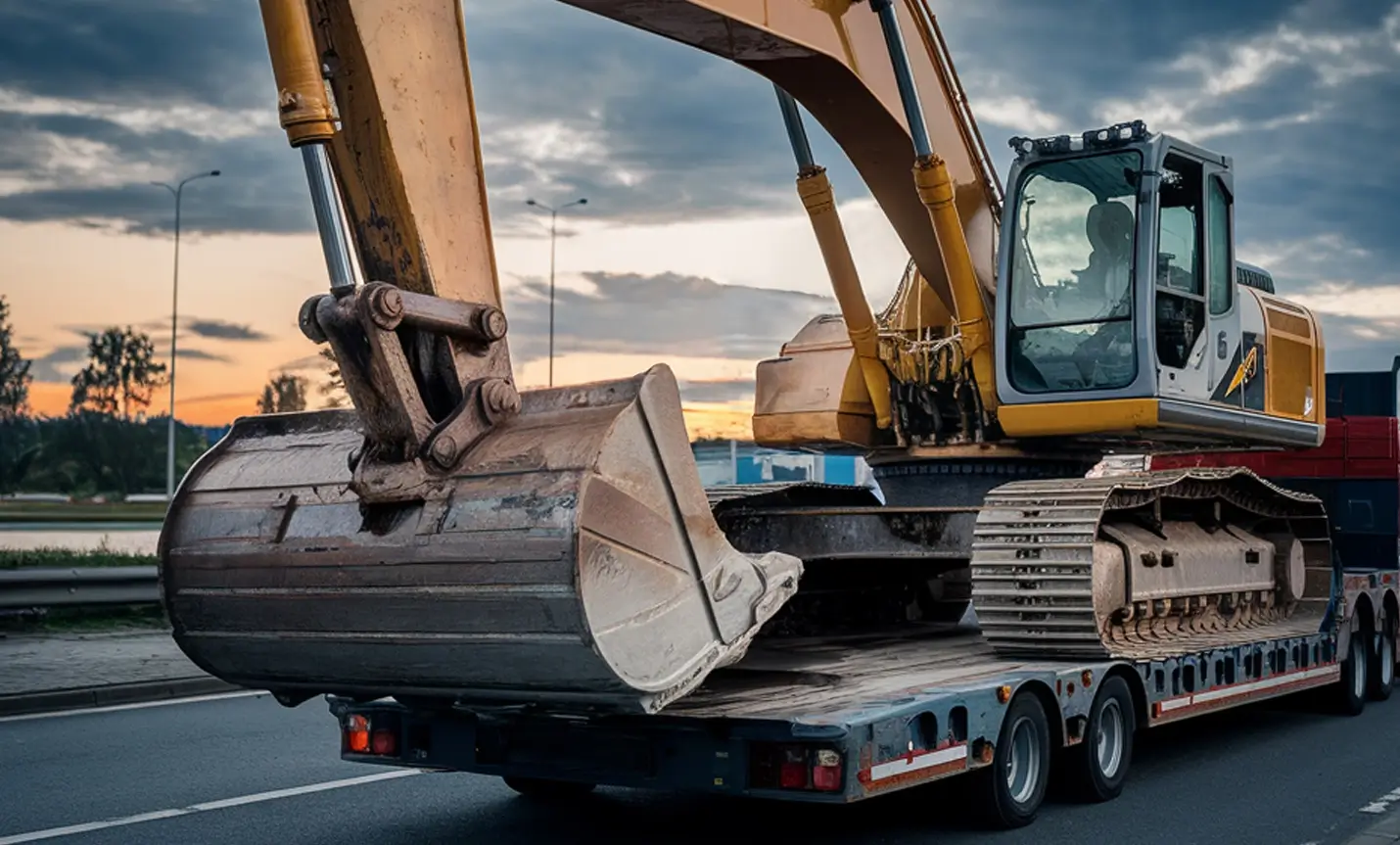
- Lowboy / RGN: a deck that sits very close to the ground. On a removable gooseneck (RGN) trailer the front detaches so equipment can be driven on from the front. This is the usual choice for tall, heavy machines such as excavators and dozers.
- Double drop: a lowered well between raised front and rear sections, for loads that need maximum height clearance.
Oversize and overweight loads
On U.S. highways a standard load is generally limited to 8.5 feet (102 inches) wide, and most states set legal height limits of roughly 13.5 to 14.5 feet for the trailer and load combined. Gross vehicle weight on the Interstate system is generally capped at 80,000 pounds without a permit.
Loads that go beyond these limits need oversize or overweight permits from each state along the route. Wider or taller loads may also need pilot (escort) vehicles, a route survey, or travel restricted to certain days and hours. Permits are a normal part of heavy haul, but they take time to arrange, which is another reason accurate dimensions matter up front.
Preparing the machine
- Clean off mud and loose debris, so nothing blows off on the highway and the machine's condition can be inspected properly.
- Lower booms, arms and blades to their transport position, and secure or remove loose attachments.
- Check for fluid leaks and follow the manufacturer's guidance on the battery.
- Photograph the machine from every side before pickup.
- If it will be driven onto the trailer, have the keys and any operating notes ready for the driver.
Our heavy equipment quote form asks for exactly these details. Request a heavy equipment quote.