- 14 Oct 2026
- Hello Transport Team
- RoRo / International
If you are moving abroad, selling a vehicle to an overseas buyer or exporting machinery, roll-on/roll-off (RoRo) shipping is often the simplest and most economical way to do it. Here is how it works and what to prepare.
What is RoRo?
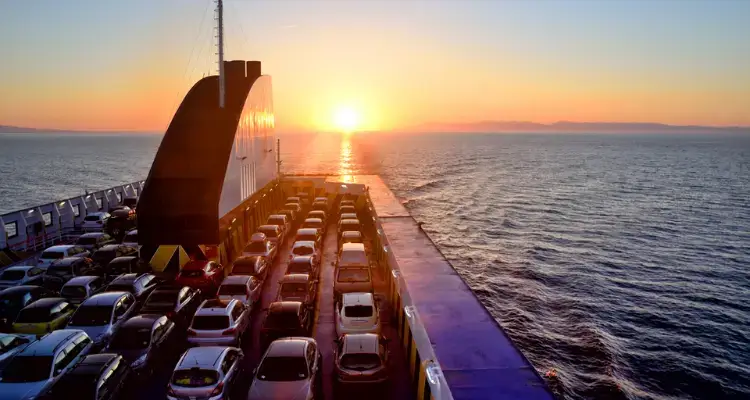
RoRo ships are built like floating multi-story car parks. Vehicles are driven up a ramp at the port of loading, secured on one of the ship's enclosed vehicle decks, and driven off at the destination port. Because there is no container to pack and nothing to lift by crane, RoRo is usually less expensive than container shipping for a single vehicle.
RoRo or container?
| RoRo | Container | |
|---|---|---|
| How it travels | Driven on and secured on a vehicle deck | Loaded and braced inside a shipping container |
| Cost | Usually lower for one vehicle | Usually higher, but a container can be shared |
| Personal items | Generally not allowed | Often allowed, subject to customs rules |
| Running condition | Usually must start, drive and brake | Non-running vehicles can be loaded |
| Best for | Cars, trucks, RVs and machinery on wheels or tracks | High-value vehicles, non-runners, or moves with household goods |
Documents you will need
Requirements vary by destination country and shipping line, but for a vehicle leaving the United States you should expect to need:
- The original title. If the vehicle is financed, a letter from the lienholder authorizing export.
- A bill of sale, if you bought the vehicle recently.
- Your passport or other government ID.
- Export filing: Electronic Export Information (EEI) filed through the Automated Export System (AES), usually handled by the shipping agent or freight forwarder.
U.S. Customs and Border Protection generally requires the vehicle and its documents to be presented at the port at least 72 hours before export. The destination country has its own import rules, duties and taxes, and sometimes age or emissions limits, so check those before you ship.
Preparing the vehicle
- Remove all personal items. RoRo lines generally accept only the vehicle and its standard equipment, such as the spare tire and jack.
- Keep fuel low, a quarter tank or less. Many lines set a limit.
- Make sure the battery is charged and the vehicle starts, drives and brakes reliably.
- Fix any fluid leaks. Leaking vehicles can be refused at the port.
- Disable the alarm and hand over a full set of keys.
- Wash the vehicle, including the underside, and photograph it from every side. Some countries inspect imports for soil and plant matter.
Getting to the port
RoRo is a port-to-port service. You can deliver the vehicle to the departure port yourself, or have it trucked there. Tell us your pickup address and the destination country and city, and our team will advise on the whole route.